As a highly experienced, full-service metal fabrication and manufacturing shop in Indiana, Estes Design & Manufacturing has worked with leading medical device and orthopedic OEMs since 1983. While early projects focused on prototype and production manufacturing, when major orthopedic OEMs needed next-generation sterilization tray solutions, Estes expanded its capabilities to include product development.
To meet universal precautions protocols, surgical sterilization tray material transitioned from plastic to metal. Ron Estes, Senior Vice President of Strategy at Estes Design & Manufacturing, met the moment and chose to develop a new metal tray design. It not only eliminated issues associated with plastics, but also problems surrounding conventional tray brackets used to hold devices in place.
“We weren’t interested in doing things the same way they’d always been done,” Ron says. “We saw the opportunity to apply our creative, innovative thinking and develop products that solved long-standing challenges for orthopedic manufacturers.”
Engineering products that solve real clinical challenges
In brainstorming sessions, the product development team evaluated the existing tray features that plagued orthopedic OEMs for years. Traditional designs typically involved trays that included specific bracket patterns for holding instruments, and the brackets were a problem. They tended to come loose and even break off if the tray was mishandled, which meant that the tray had to be retired from service.
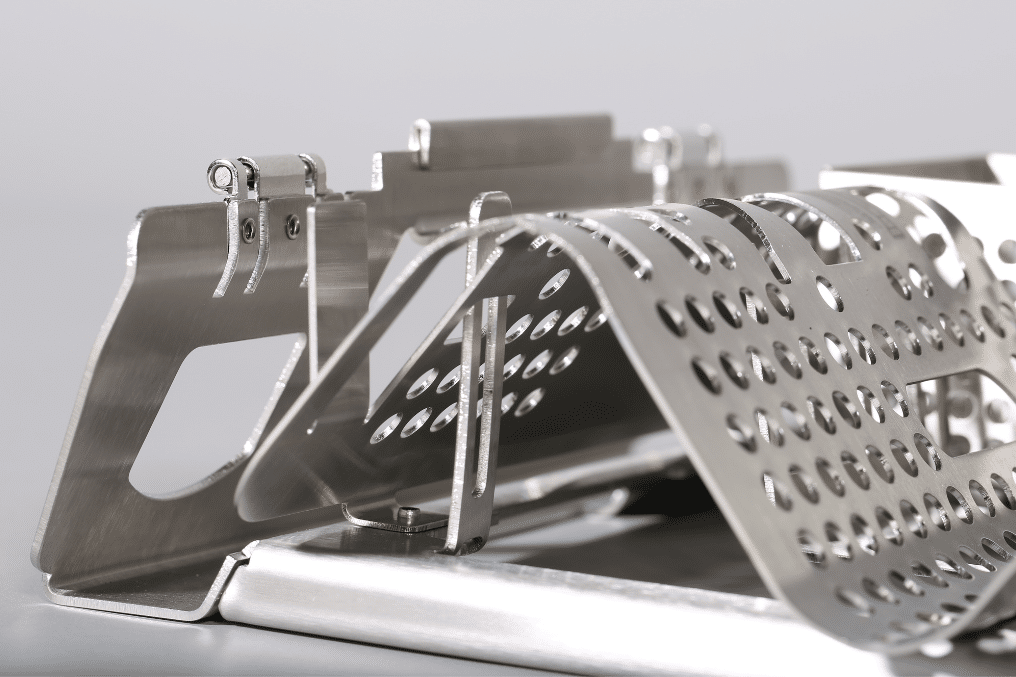
The Estes team set a goal to eliminate the brackets by finding another way to support the instruments in the trays. They achieved their goal with the design of the Estes Wave Tray, and while the shop didn’t have a customer when they developed the tray, it did have a design that worked.
Given that the shop prototyped its new tray in stainless steel at the same time orthopedic OEMs were scrambling to eliminate plastic trays, the Estes Wave Tray generated immediate interest. Estes partnered with an OEM located in Indiana to produce it for them, and the patented Wave Tray design remains in production today.
Designing medical products for manufacturability and assembly
In addition to solving problems with new designs, Estes differentiates itself from others by holding high design for manufacturability and assembly (DFMA) standards. The Estes Wave Tray, for example, reduced the bill of materials from the existing design by over 90%. Estes’ forward-thinking design significantly reduced the number of components, requiring fewer brackets, screws, and rivets. From a manufacturing standpoint, fewer parts mean faster production and reduced overall costs. Additionally, fewer parts decrease risk variables, resulting in a more reliable product.
Along with the innovative tray design, Estes engineered a new and improved latching system for the sterilization cases. Once again, the design solved several problems associated with the existing product, one of which was rivets that would loosen or break. With a disruptive mindset to enhance user experiences on behalf of its orthopedic partners, the Estes product development team developed a better, more reliable latching system.
From Engineering Partner to Production Partner
While the Wave Tray and latching system remain hallmarks of Estes’ innovative approach to medical product development, they also laid the foundation for the company’s expanded engineering and manufacturing capabilities that serve the medical industry today.
Estes Design & Manufacturing continues to support medical device and orthopedic OEMs with a comprehensive range of engineering, prototyping, custom fabrication, and manufacturing capabilities. For instance, with Estes’ advanced 3D printing capabilities the company’s engineers can rapidly prototype, validate, and refine products before production begins.
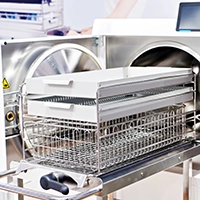
Once designs are finalized, Estes combines ISO 13485-certified quality with advanced manufacturing technologies, including precision 5-axis machining and laser welding. Laser welding provides highly consistent, cosmetic-quality joints that require little to no post-processing. Customer testing shows weld strengths that exceed those of traditional TIG-weldedassemblies. Estes Design & Manufacturing’s capabilities are especially valuable for high-volume sterilization systems, stainless steel transfer equipment, and orthopedic sterilization products, where durability, repeatability and process validation are critical.
“Companies that are looking for a better way appreciate what we bring to the table,” explains Ron. “They aren’t interested in maintaining the status quo. They’re interested in solving problems, and that’s where our design capabilities create value.”